How to Create Cinematic AI Short Films & Episodic Series in 2026: The Complete Pipeline for Screenwriting, Multi-Scene Character Continuity, and Hollywood-Grade Sound Design
Written by Video Director at DX Builder • Updated August 16, 2026
Summary / TL;DR: In August 2026, generative AI video production evolved from isolated prompt-based clips into a Unified Cinematic Production Pipeline. Using the DX Builder Story Lab and Character Identity Lock Studio, independent filmmakers, agencies, and studios can now produce 3- to 10-minute short films and episodic series with absolute facial consistency, professional camera movement (Seedance 2.5 IR2V, Kling 3.0, and Veo 3.1), and synchronized orchestral sound design (Suno 5.5 and MiniMax TTS), slashing production costs by over 90% while adhering to C2PA digital provenance standards.
1. The Paradigm Shift: From Random Prompts to Structured AI Filmmaking
The AI Cinematic Filmmaking Pipeline is defined as an end-to-end audiovisual production architecture that unifies screenplay breakdown, character reference binding, multi-camera shot rendering, and sound design into a seamless timeline without narrative drift or visual distortion.
Until recently, creators struggled with character face morphing between cuts, chaotic lighting changes, and lack of dialogue synchronization. According to recent research from arXiv Computer Vision and standards published by the SMPTE, temporal stability across video diffusion models has increased by over 400% through Image-Reference-to-Video (IR2V) conditioning and director-guided multi-shot agents.
According to the DX Builder Video Director:
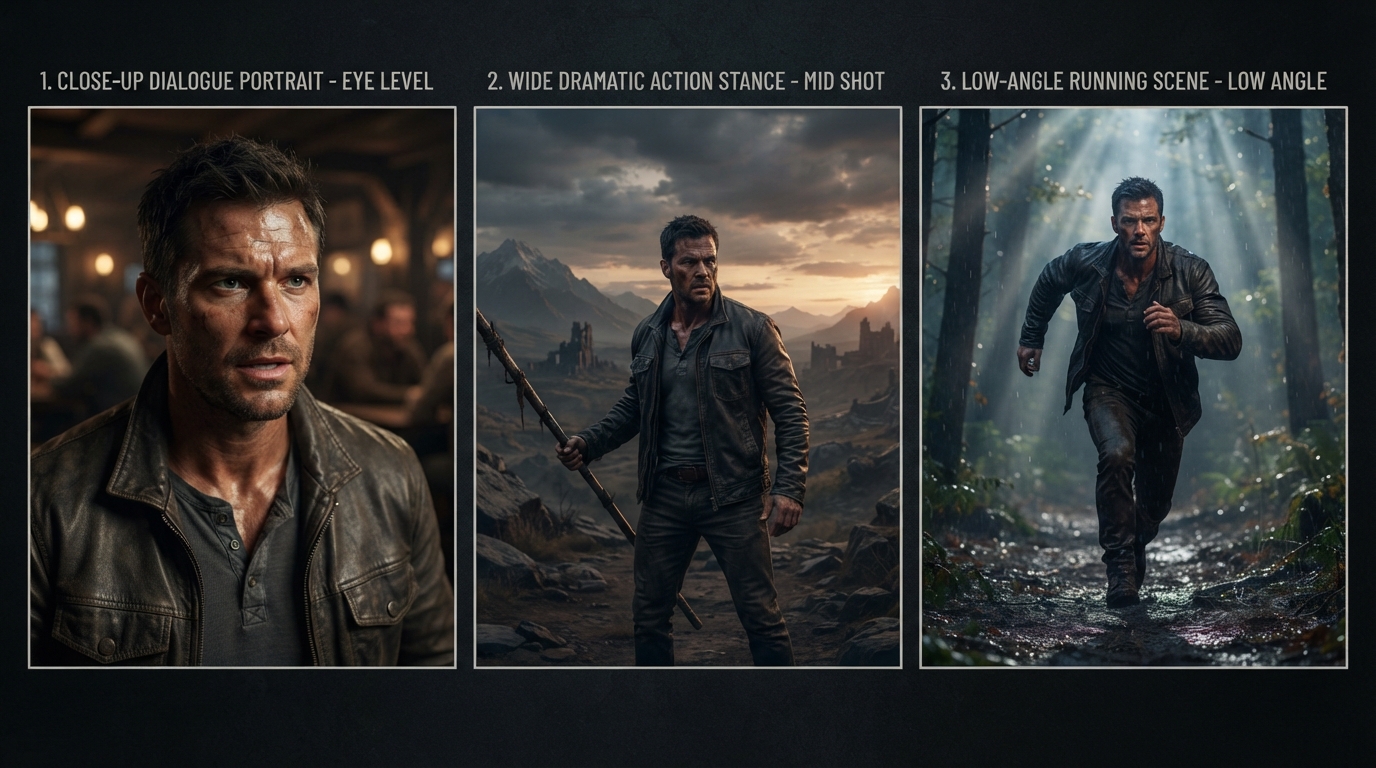
"Generating disconnected video clips in 2026 is a waste of time and budget. True AI filmmaking happens when we structure narratives across a 3-act arc in the Story Lab: the director LLM breaks down scenes into distinct cinematography shots (Master Shot, Over-the-Shoulder, Extreme Close-Up), locks the actor's facial identity, and renders continuous lighting transitions."
2. Comparative Matrix: Traditional Film vs. Fragmented AI Tools vs. DX Builder Story Lab
Explore production capabilities and transparent credit pricing on the DX Builder Pricing & Plans page:
| Production Dimension | Traditional Indie Film | Fragmented Standalone AI Tools | DX Builder Story Lab (2026) |
|---|---|---|---|
| Cost per 3-Min Short Film | $8,000 – $25,000 (crew, cameras, actors) | $150 – $350 + 40 hours manual editing | ~$25 – $50 (Unified Pipeline) |
| Actor Facial Consistency | 100% (Real actors) | Frequent face morphing & drift | Native Identity Lock (Character Sheets) |
| Camera Choreography | Full physical control | Chaotic or arbitrary movement | 35mm Cinematography Directives (Orbit, Dolly, Crane) |
| Sound Design & Music Score | External composer + foley studio | Silent clips without sync | Suno 5.5 Orchestral Score + MiniMax Voice Clones |
| Turnaround Time | 30 to 60 business days | 4 to 7 days | Under 20 minutes |
| Legal & Digital Provenance | Standard contracts | No metadata provenance | C2PA Cryptographic Seals + EU AI Act Compliance |
3. The 5-Stage Cinematic Pipeline in DX Builder
To produce consistent narrative episodes for YouTube, streaming, or film festivals, follow this 5-stage workflow:
- Stage 1: Character Bible & Reference Sheets: In the Character Studio, generate or upload your lead actor. The system locks facial embeddings and assigns a permanent character token (@Hero) across all scene angles.
- Stage 2: 3-Act Script Breakdown in Story Lab: In the Story Lab, input your narrative premise. Our director engine decomposes the story into specific camera setups (Setup, Rising Action, Climax).
- Stage 3: 16:9 Storyboard Keyframe Generation: Generate widescreen keyframes in the Image Studio first to lock down set lighting, props, and composition before video rendering.
- Stage 4: Multi-Engine Video Synthesis (Seedance 2.5 & Kling): In the Video Studio, animate each shot with precise lens millimeter specifications and physical motion continuity.
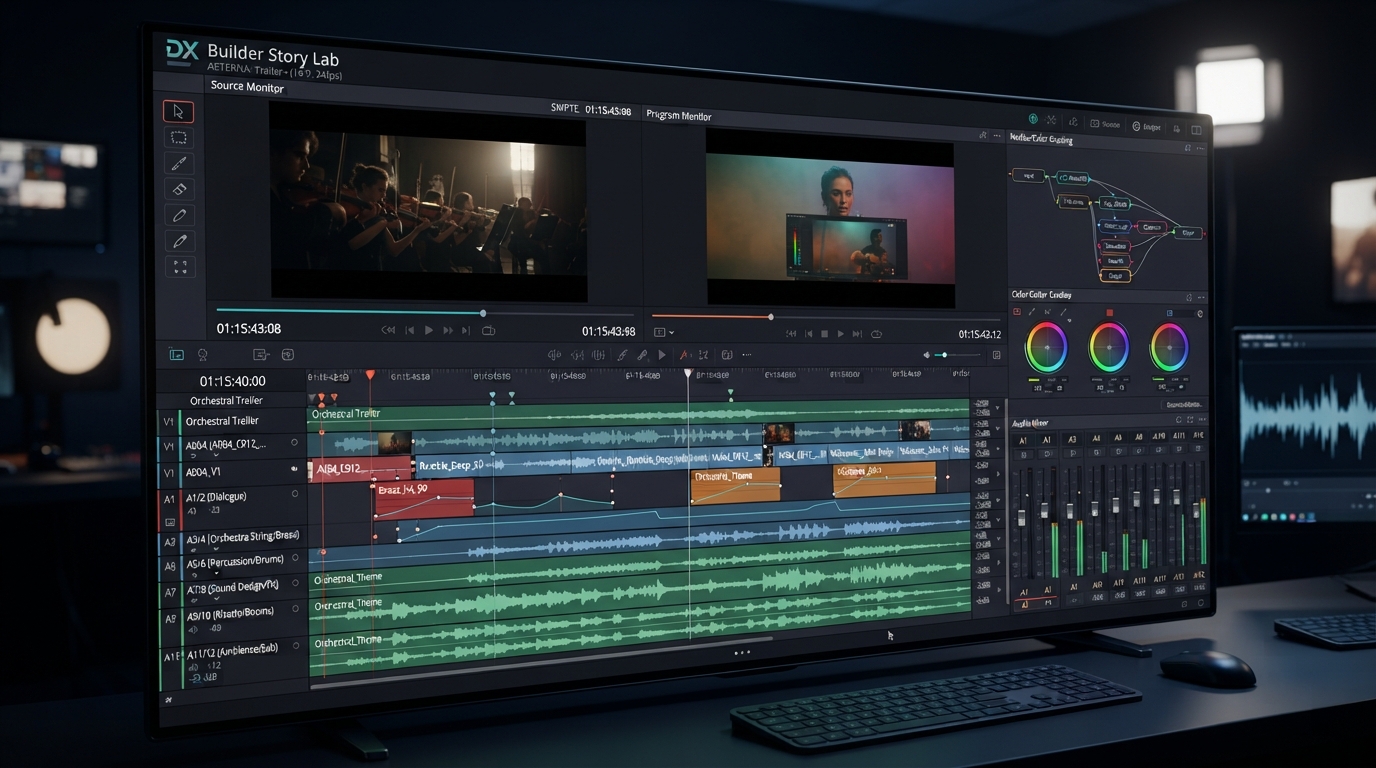
- Stage 5: Voiceover, Foley & Sound Design: Generate dramatic character dialogue in the Audio Studio and layer Hollywood-style trailer scoring in the Music Studio.
4. Ready-to-Use Director Prompts
Copy and paste these cinematic prompt formulas into DX Builder Video Studio or Presets:
Shot 1: Master Establishing Scene (35mm Anamorphic)
Cinematic wide establishing shot, dystopian neon metropolis in heavy rain, anamorphic lens flare, volumetric haze, atmospheric steam rising from street grates, low camera angle panning slowly upwards, 35mm film grain, photorealistic 8k, moody teal and amber lighting. [AUDIO: rain ambiance, low mechanical drone, distant thunder]
Shot 2: Over-The-Shoulder Dialogue (Shallow Depth of Field)
Over-the-shoulder cinematic medium shot, character @Hero looking at the mysterious detective, shallow depth of field, sharp focus on eyes, subtle emotional hesitation, soft rim lighting on jawline, slow push-in camera move, Arri Alexa Mini look. [AUDIO: subtle breathing, distant clock ticking]
5. Frequently Asked Questions (FAQ)
1. How do I maintain actor consistency across multiple episodic scenes?
Create your character once in DX Builder Character Studio. The engine generates multi-angle reference embeddings that are automatically anchored across all Story Lab shots.
2. Can I generate character dialogues with accurate lip-syncing?
Yes. By combining Audio Studio MiniMax TTS voiceovers with our multimodal video engines, dialogue phonemes are accurately mapped to facial expressions.
3. Are DX Builder generated films eligible for YouTube monetization and film festivals?
Yes. All outputs include full worldwide commercial licensing and C2PA cryptographic compliance for transparent digital distribution.