
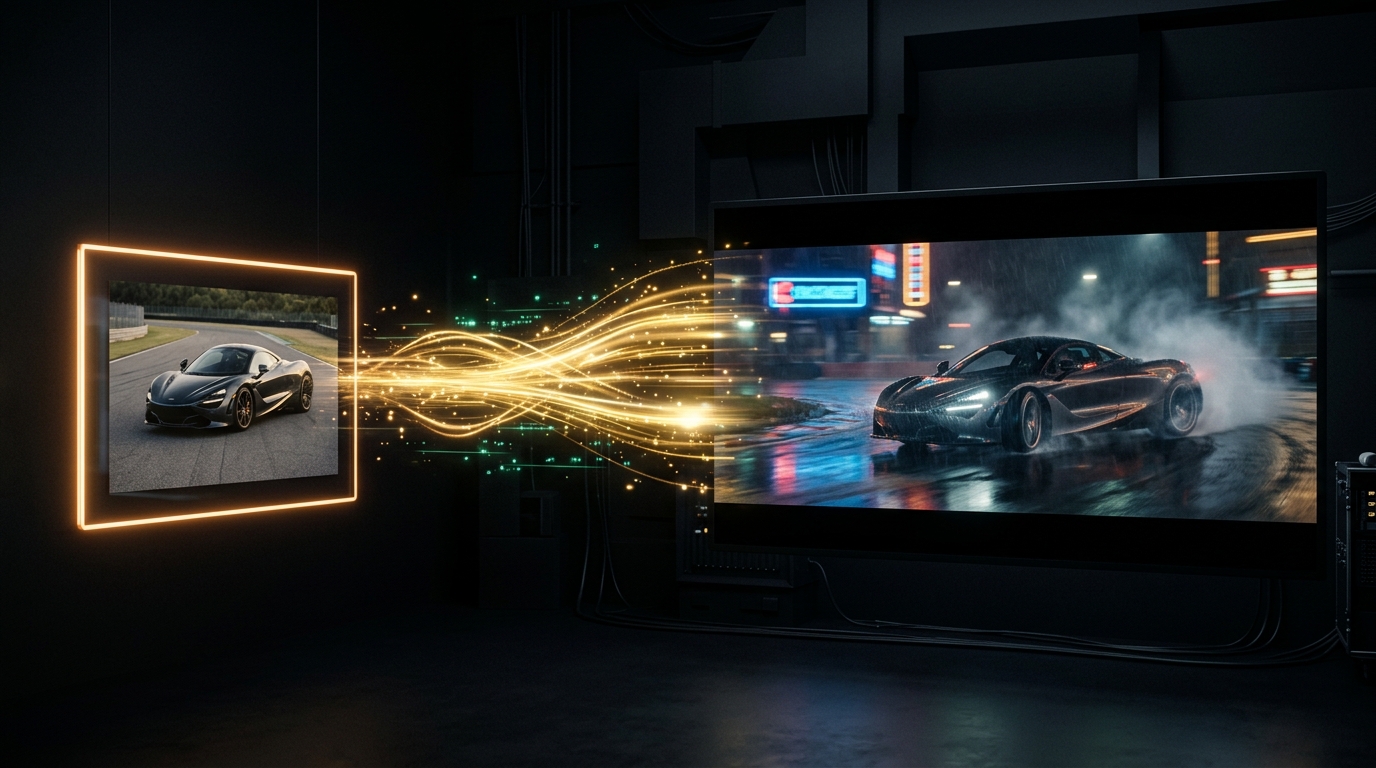
1. Model Evolution: Kling 4.0 Flash vs. Past Models (Kling 4.0 Standard, Kling 3.0 Turbo & Kling 2.6 Pro)
To understand where Kling 4.0 Flash fits, we need to compare it directly against previous generations of the Kling video family integrated on DXBuilder. In earlier generations (Kling 2.5/2.6 and Kling 3.0 Turbo), choosing the "fast" tier meant dropping down to rigid 5s or 10s clips and losing complex prompt adherence. Kling 4.0 Flash keeps the 8,000-character prompt parser and 1-second integer duration selector (3s to 20s) of the 4.0 architecture, stripping out only the multi-reference Omni conditioner and audio synthesizer:
| Technical Parameter | Kling 4.0 Flash (NEW — Nov 2026) | Kling 4.0 Standard (Omni — Oct 2026) | Kling 3.0 Turbo / Pro (Legacy) | Kling 2.6 Pro (Legacy) |
|---|---|---|---|---|
| Contract / Endpoint ID | kling-4.0/flash-keyframe-to-video | kling-4.0/reference-to-video | kling_v3_turbo_i2v / o3_pro | kling_2_6_pro_i2v / t2v |
| Continuous Clip Duration | 3s to 20s (1s integer steps) | 3s to 30s (1s integer steps) | Fixed 5s, 10s, or 15s | Fixed 5s or 10s only |
| Output Resolution | Fixed 720p (1280×720 / 1280×548 in 21:9) | 720p or 1080p Full HD | 720p (Turbo) / 1080p (Pro) | 720p / 1080p |
| Supported References | Text-only or 1 Starting Image (@first_frame) up to 10 MB | Up to 10 Images (@image_1..10) + 5 Videos (@video_1..5, max 30s) | First/Last Frame + basic Elements | 1 Starting Image or First/Last Frame |
| Supported Aspect Ratios | 16:9, 9:16, 1:1, 21:9 (or exact image geometry) | auto, 16:9, 9:16, 1:1, 21:9 | 16:9, 9:16, 1:1 (no native 21:9) | 16:9, 9:16, 1:1 |
| Prompt Character Limit | Up to 8,000 characters | Up to 8,000 characters | Up to 2,500 characters | Up to 1,500 characters |
| Native Audio | No (100% silent output) | Yes (Wobble-free speech, SFX & keep_original_sound) | Basic SFX only / No spoken lip-sync | Silent |
| Official Cost (DX Credits / s) | 12.75 cr/s ($0.085/s) | 21.38 cr/s (720p) | 31.88 cr/s (1080p) | ~18.00 to 28.00 cr/s | ~20.00 to 30.00 cr/s |
2. Kling 4.0 Flash vs. Direct Video Competitors (PixVerse V6 Max, Seedance 2.5, Wan 3.0 & MiniMax H3)
How does Kling 4.0 Flash stack up against competing video generators available right now on DXBuilder? Here is the head-to-head comparison across video-only engines:
| Video Benchmark | Kling 4.0 Flash | PixVerse V6 Max | Seedance 2.5 Cinema IR2V | Alibaba Wan 3.0 | MiniMax H3 (2K) |
|---|---|---|---|---|---|
| Continuous Duration | 3s to 20s (1s steps) | 1s to 15s (1s steps) | 4s to 30s native | 10s, 15s, 20s, 30s | 4s to 15s |
| Output Resolutions | 720p fixed | 360p, 540p, 720p, 1080p | 480p, 720p, 1080p | 480p, 720p, 1080p | 768p up to 2K Native |
| Keyframe Conditioning | 1 Starting Frame (@first_frame) | 1 Starting Frame (I2V mode) | First/Last Frame + Multi-Ref | First/Last Frame + Audio/Video | First/Last Frame + Multi-Ref |
| Prompt Ceiling | 8,000 characters | 5,000 characters | 5,000 characters | 5,000 characters | 5,000 characters |
| 10-Second Cost @ 720p | 128 credits (silent) | 66 cr (silent) | 90 cr (w/ audio) | ~180 to 250 credits | ~180 to 240 credits | ~300 credits (2K) |
| Primary Sweet Spot | Kling 4.0 photorealistic optics up to 20s with 8,000-char prompts at -40% cost | Ultra-cheap 360p drafts (3.6 cr/s) & 1080p social clips up to 15s | Heavy action physics & multi-angle identity lock across 30s | Multilingual spoken dialogue & 30s Story Lab continuity | 2K sharpness & commercial lighting |
3. Real-World Use Cases: When to Use Kling 4.0 Flash (And When to Switch)
| Best Production Use Cases for Kling 4.0 Flash (Best for) | Switch to Kling 4.0 Standard or Seedance 2.5 If (Skip if) |
|---|---|
| 1. Storyboard Pre-Visualization & Camera Blocking (3s–20s): Validate complex 4,000-character scene directions for just 39 credits (3s) or 64 credits (5s) before committing budget to 1080p masters. | You need 21 to 30 seconds in a single take or native 1080p Full HD output — flip the selector to Kling 4.0 Standard on the same page. |
2. @first_frame Anchored Commercial B-Roll: Animate an approved product photo or portrait still (up to 10 MB JPEG/PNG/WebP) across 8 to 20 seconds while locking the exact aspect ratio of your image. | Your shot requires an ending keyframe (Last Frame), multiple character reference images (@image_1..10), or video motion transfer (@video_1). |
| 3. Music Videos & Post-Scored Commercials: When your final audio comes from Suno / Audio Studio (/music) or an external voiceover, paying extra for AI-generated video audio that you will mute in editing wastes 40% of your credits. | Your scene features a character speaking directly on camera and requires native lip-synced dialogue. |
4. 16-to-20-Second 21:9 Anamorphic Establishing Shots: While PixVerse V6 Max caps at 15 seconds, Kling 4.0 Flash renders up to 20 full seconds in native 21:9 cinema framing (1280×548). | You want 360p throwaway tests for 18 credits (use PixVerse V6 Max at 360p for sub-5s micro-tests). |
4. Complete Pricing Breakdown: Kling 4.0 Flash vs. Kling 4.0 Standard
At the supplier level, Kling 4.0 Flash is priced at $0.085 per output second (8.5 USD cents/s), billing strictly for output duration regardless of whether you attach a @first_frame image. Under DXBuilder's standard 1.5x credit formula (Math.ceil(8.5 * duration * 1.5)), here is the exact cost comparison across every common duration:
| Clip Duration | Base Supplier API (USD) | Kling 4.0 Flash (720p) | Kling 4.0 Standard (720p I2V) | Kling 4.0 Standard (1080p I2V) | Immediate Credit Savings |
|---|---|---|---|---|---|
| 3 Seconds (Minimum) | $0.255 | 39 credits | 65 credits | 96 credits | -40% vs 720p (-59% vs 1080p) |
| 5 Seconds (Short Hook) | $0.425 | 64 credits | 107 credits | 160 credits | -40% (Save 43 to 96 credits) |
| 10 Seconds (Standard) | $0.850 | 128 credits | 214 credits | 319 credits | -40% (Save 86 to 191 credits) |
| 15 Seconds (Extended) | $1.275 | 192 credits | 321 credits | 479 credits | -40% (Save 129 to 287 credits) |
| 20 Seconds (Flash Max) | $1.700 | 255 credits | 428 credits | 638 credits | -40% (Save 173 to 383 credits) |
5. Pros & Cons + DXBuilder's Server-Side Protection Guards
| Verified Production Advantages (Pros) | Real Model Limitations (Cons) |
|---|---|
| ✓ 40% lower cost than Kling 4.0 Standard: Nearly doubles the number of shots you can generate per credit pack. | ✗ Silent video output only: No native dialogue or SFX synthesis. |
| ✓ Full 8,000-character prompt capacity: Supports detailed multi-beat camera and lighting instructions across 3–20s. | ✗ 20-second ceiling & 720p cap: Cannot generate 25–30s clips or native 1080p without upscaling. |
| ✓ EXIF Pixel Baking & FFprobe MP4 Verification: Prevents sideways smartphone uploads and rejects 480p/540p downgrades before delivery. | ✗ Single starting image only (@first_frame): Rejects lastFrame, intermediate keyframes, and video references upfront. |
All contract rules, pricing constants (COST_CENTS_PER_SECOND = 8.5, CREDIT_MULTIPLIER = 1.5), upload limits (MAX_FIRST_FRAME_BYTES = 10000000, 64 MP max), and ffprobe output tolerances (Math.abs(short - 720) <= 2 || Math.abs(long - 1280) <= 2, duration delta <= 0.3s) are verified directly from DXBuilder's live production modules (kling4-flash-contract.cjs, kling4-flash-output.cjs, and kling4-flash-provider.cjs deployed November 5, 2026).
6. Three Copy-Paste Prompt Formulas for Kling 4.0 Flash
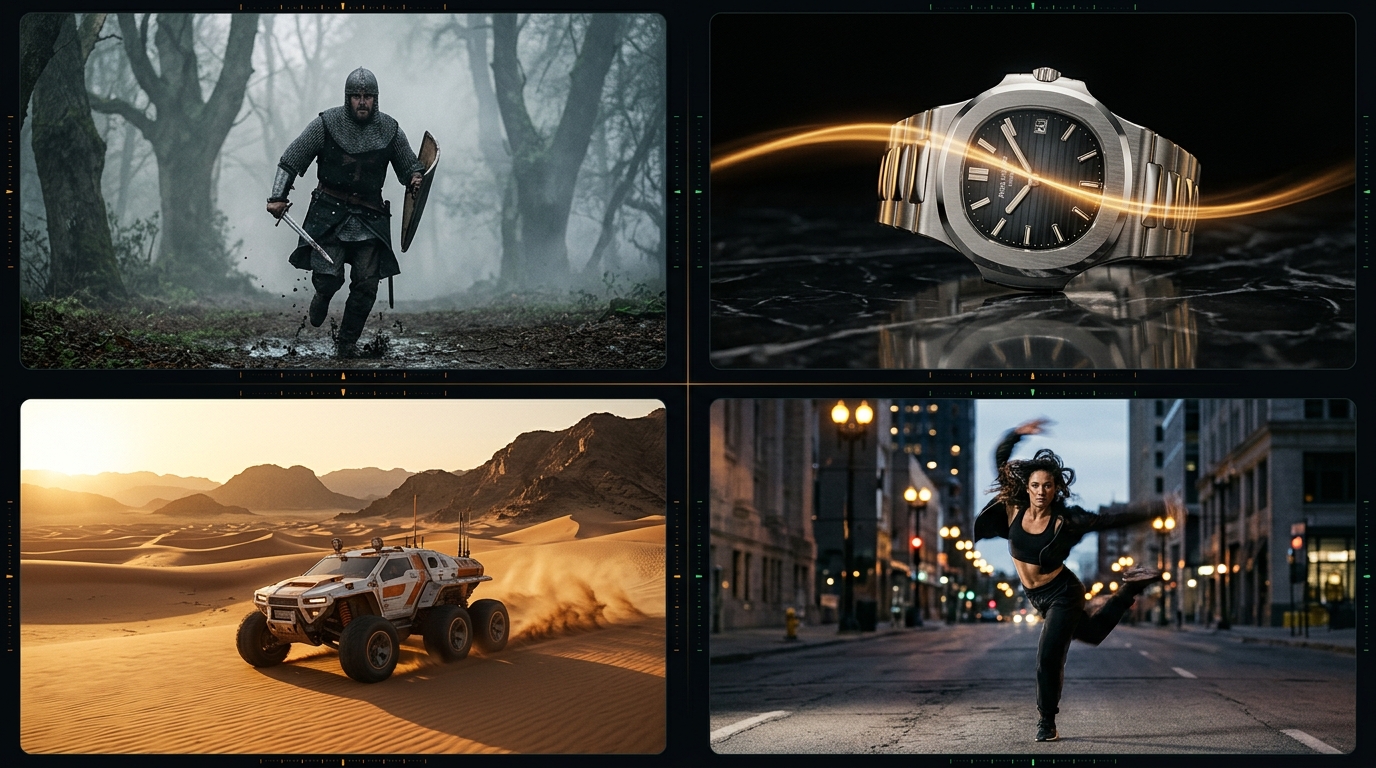
Formula 1: Commercial Product Reveal with @first_frame (10s @ 720p = 128 credits)
[Engine: Kling 4.0 Flash (/kling-4-0) | Duration: 10s | Resolution: 720p | Input: Upload 1 Starting Image]
Starting from @first_frame, a warm amber (#FF9B3E) wave of light sweeps smoothly across the dark obsidian marble floor, illuminating the metallic contours of the subject. The camera performs a slow, stabilized push-in dolly movement from medium shot to close-up over 8 seconds, then eases into a rock-steady final frame for the last 2 seconds.
Formula 2: 21:9 Anamorphic Text-to-Video Action Shot (15s @ 720p = 192 credits)
[Engine: Kling 4.0 Flash (/kling-4-0) | Duration: 15s | Resolution: 720p | Aspect Ratio: 21:9 (No starting image)]
35mm anamorphic widescreen tracking shot following a matte-black expedition rover speeding across golden desert dunes at dusk. Plumes of fine sand billow dynamically behind the tires under warm amber rim light (#FF9B3E). Low-angle side tracking camera matching the vehicle's velocity, stabilizing into a wide horizon composition at second 14.
Formula 3: Fast Vertical 9:16 Storyboard Motion Test (5s @ 720p = 64 credits)
[Engine: Kling 4.0 Flash (/kling-4-0) | Duration: 5s | Resolution: 720p | Input: Vertical 9:16 @first_frame]
From @first_frame, the street dancer explodes into a fluid spin on the wet asphalt, water droplets catching the neon amber reflections in slow motion before landing cleanly in a balanced crouch facing the lens. Handheld stabilized tracking shot.
Frequently Asked Questions About Kling 4.0 Flash (FAQ / PAA)
What is the exact difference between Kling 4.0 Flash and Kling 4.0 Standard?
Kling 4.0 Flash generates silent 3-to-20-second 720p clips from text or a single optional starting image (@first_frame) at 12.75 credits/s (40% cheaper). Kling 4.0 Standard supports up to 30 seconds, 720p and 1080p, native audio, up to 10 reference images (@image_1..10), and up to 5 reference videos (@video_1..5) at 21.38 cr/s (720p) or 31.88 cr/s (1080p).
How does the @first_frame tag work in Kling 4.0 Flash?
When you upload a starting image (JPEG, PNG, or WebP up to 10 MB) in /kling-4-0, reference it as @first_frame in your prompt. The server measures the exact pixel dimensions (after baking EXIF rotation) and locks the video's aspect ratio to match your image.
Should I use Kling 4.0 Flash or PixVerse V6 Max for fast video generation?
Choose Kling 4.0 Flash when you need 16–20s durations, long scene directions up to 8,000 characters, or Kling 4.0's signature optical physics. Choose PixVerse V6 Max in /video when you want ultra-cheap 360p micro-drafts (18 credits for 5s) or native 1080p with audio on clips up to 15s.
Try Kling 4.0 Flash (3s–20s @ 12.75 Credits/s) on DXBuilder
Switch seamlessly between Kling 4.0 Standard and Kling 4.0 Flash while keeping each model's settings saved.
About the Author: Filipe Heitor
Founder and Lead AI Architect at DXBuilder. Film director and specialist in spatio-temporal video diffusion pipelines.