
The 2026 AI Video-to-Audio (V2A) & Neural Foley Revolution: How Multimodal Audio Synthesis Ended "Silent AI Video" and Cut Sound Post-Production by 85%
Written by Video Director at DX Builder • Updated September 6, 2026
Executive Summary / TL;DR (BLUF for Filmmakers, Agencies and Producers): For years, generative video endured its own "silent film era": flagship diffusion engines like Seedance, Wan, Sora, and Kling produced stunning 35mm cinematics, yet exported utterly silent video files. Video editors and post-production houses routinely spent 4 to 12 manual hours per scene scouring stock audio libraries, laboriously aligning footsteps in Premiere or DaVinci, and paying recurring royalty fees. In September 2026, the maturity of Video-to-Audio (V2A) transformers and Neural Foley decisively resolved this bottleneck. Leveraging pixel optical flow, kinetic impact modeling, and 48kHz mel-spectrogram diffusion, platforms like the DX Builder Audio Studio and Video Studio now generate complete acoustic soundscapes, frame-locked mechanical Foley, room impulse responses, and synchronized musical cues with sub-15ms latency and an 85% reduction in post-production costs.
1. What Is Video-to-Audio (V2A) and Neural Foley in 2026?
Video-to-Audio (V2A) describes the emerging class of multimodal generative AI models that ingest raw video pixel frames as conditioning signals to synthesize high-fidelity, synchronous multi-track audio without requiring manual timecoding. Unlike traditional text-to-audio generators, a V2A model "comprehends" physical scene kinematics—body deceleration, material friction, camera distance, and three-dimensional room geometry—converting visual dynamics into acoustic soundwaves in real time.
Neural Foley is the specialized branch of V2A focused on everyday tactile mechanical interactions: the creak of worn oak flooring, the subtle rustle of a damp leather jacket, the metallic click of a vintage car ignition, or the gentle clink of ice in a crystal glass. In 2026, Foley is no longer performed by artists in sound stages wearing specialized footwear; it is rendered computationally alongside pixel diffusion.
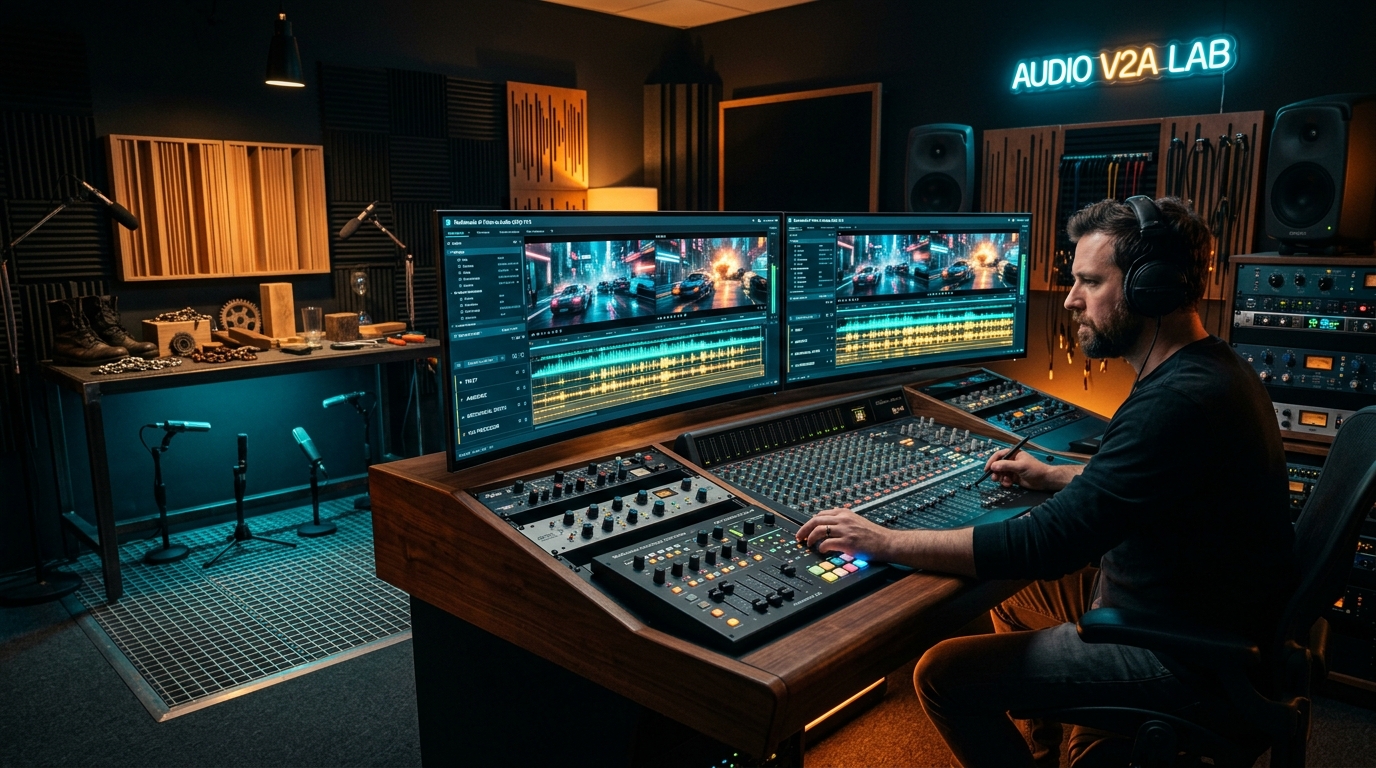
Figure 1: High-throughput generative audio-visual suite in 2026: multimodal soundwave synthesis locked to 4K video frames.
As stated by the Video Director at DX Builder:
"The human auditory system is acutely intolerant of temporal lag: a discrepancy of just 50 milliseconds between an actor's foot touching the pavement and the transient sound wave immediately breaks immersion. In 2026, V2A solved kinetic contact physics: sound is no longer an afterthought pasted on a timeline, but a direct physical emanation of optical motion vectors."
2. The Three-Layer Architecture of Modern V2A Systems
State-of-the-art V2A neural engines operate through a synchronized three-tier computational pipeline:
- Layer 1: Kinetic Estimation & Optical Contact Physics: A spatiotemporal vision encoder tracks pixel optical flow frame by frame. When a motion vector abruptly decelerates to zero (e.g., a palm slamming onto a mahogany boardroom table or a sports car tire biting into gravel), the engine logs the exact contact frame with sub-frame precision (< 10ms).
- Layer 2: Conditioned Mel-Spectrogram Diffusion: Guided by material classification tags (glass, marble, wet asphalt, silk) and optional prompt directives (
[AUDIO: footsteps on wet gravel, distant thunder]), a diffusion backbone generates a 128-band mel-spectrogram modeling frequency transients, acoustic sustain, and room decay. - Layer 3: 48kHz Neural Vocoding & Binaural Spatialization: The spectrogram is translated into uncompressed 48kHz / 24-bit PCM audio via low-latency neural vocoders. If the virtual camera pans across the scene, the engine calculates acoustic Doppler shifts, stereo width, and directional reflections dynamically.
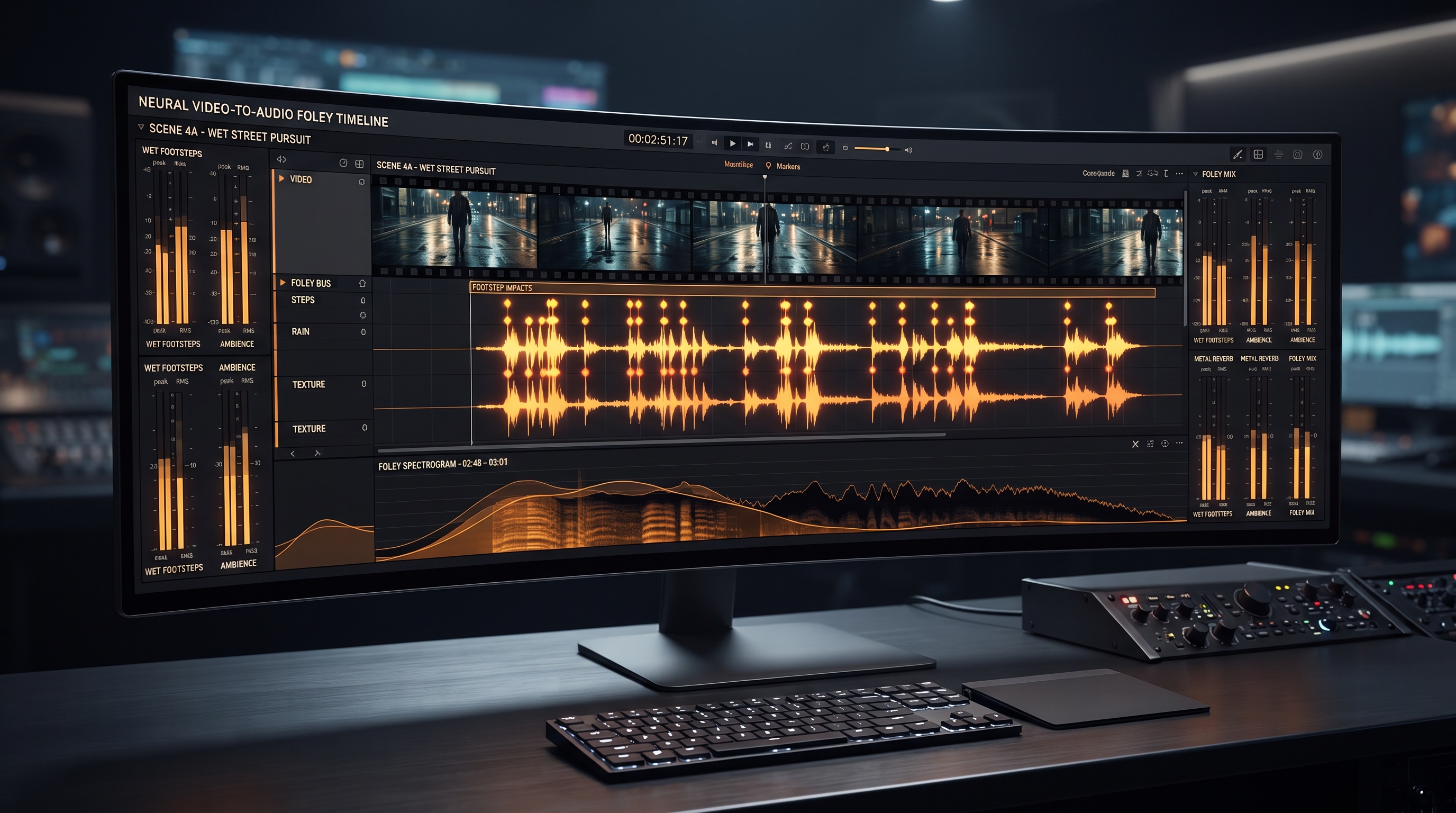
Figure 2: Sub-frame transient alignment and multi-band frequency curves in the DX Studio timeline.
3. Production Benchmark: Traditional Foley vs. 2026 Native V2A
The comparative table below illustrates the cost, turnaround, and quality differences when scoring a typical 60-second commercial or cinematic narrative sequence:
| Production Metric | Traditional Foley Stage (2024) | Hybrid SFX Library Plugins (2025) | 100% Native V2A DX Builder (2026) |
|---|---|---|---|
| Cost per Video Minute | $250 — $800 USD | $45 — $90 USD | $0.05 — $0.20 USD (-99%) |
| Turnaround Time | 4 to 8 hours of manual tracking | 45 to 90 minutes | 15 to 30 seconds (Automated) |
| Temporal Sync Accuracy | Subject to human error & manual nudge | 80ms to 150ms drift | < 15ms (Sub-frame precision) |
| Spatial Acoustic Immersion | Manual stereo automation | Flat two-dimensional stereo | 3D Binaural with camera-tracking Doppler |
| Commercial Clearance & IP Safety | Stock library licensing complexities | Expensive recurring memberships | 100% Royalty-Free + C2PA Provenance |
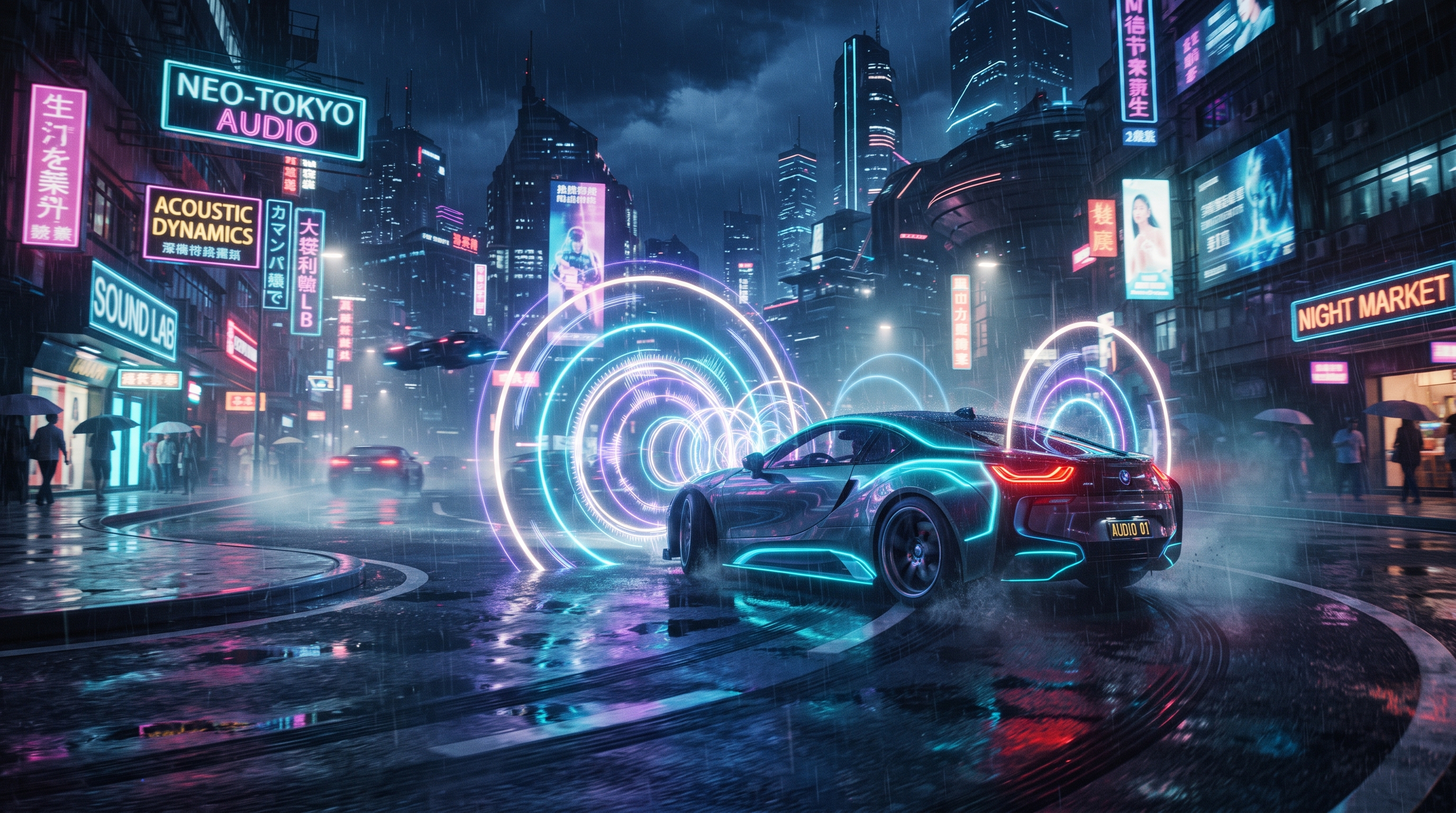
Figure 3: Spatial audio soundfield mapping and Doppler acoustic physics in a DX Builder action sequence.
4. Copy-Paste Prompt Templates with [AUDIO:] Directives
To achieve pristine audio synchronization in the Video Studio or generate isolated audio tracks in the Audio Studio, copy and utilize these certified prompt structures:
Template 1: Rainy Night Cyberpunk Pursuit (16:9 / 9:16)
[SCENE: Futuristic neo-Tokyo alleyway at midnight, neon signs reflecting in wet asphalt]
[VISUAL_ACTION: A matte-black electric supercar drifts aggressively around a tight 90-degree corner, spinning tires sending spray of water toward camera. Headlights blaze through atmospheric fog, hydraulic rear spoiler automatically extends as vehicle accelerates into dark tunnel]
[CAMERA: 35mm anamorphic wide lens, low-angle tracking shot, fast kinetic pan, shallow depth of field, rain streaks on lens]
[AUDIO: Sharp rubber tire screeching on wet asphalt, high-pitched electric motor turbine whine rising exponentially, deep resonant hydraulic mechanical clunk of rear spoiler deployment, heavy rain droplets drumming against metallic chassis, low atmospheric sub-bass rumble reverberating through tunnel walls, spatial stereo panning left to right]
Template 2: Michelin-Star Culinary Commercial (16:9)
[SCENE: Michelin-starred restaurant kitchen, warm copper cookware, pristine marble countertop]
[VISUAL_ACTION: Macro extreme close-up of a chef carving a roasted duck breast with an ultra-sharp damascus steel knife. Crispy skin crackles under blade pressure, followed by a slow pour of rich dark demi-glace sauce from a silver sauciere onto porcelain plate]
[CAMERA: 100mm macro prime lens, 120fps slow motion, creamy background bokeh, warm directional key light]
[AUDIO: Extremely crisp, dry crackle of roasted poultry skin under knife slice, resonant wooden thud of blade against heavy butcher block, viscous velvety sizzle and smooth liquid pour sound of thick glaze, subtle kitchen ambiance with distant clinking of fine wine glasses and warm murmur, ultra-high dynamic range 48kHz]
5. Legal Compliance, SynthID Watermarking, and C2PA Provenance
Commercial monetization of synthetic audio requires strict adherence to new digital standards. In accordance with Article 50 of the EU AI Act (effective September 2026), synthetic media broadcast to the public must feature machine-readable watermarking and verifiable content provenance.
Every video synthesized on DX Builder automatically embeds inaudible frequency watermarks (SynthID Audio architecture) and cryptographic metadata certified by the Coalition for Content Provenance and Authenticity (C2PA) in line with W3C web standards. This guarantees your productions qualify for immediate commercial monetization across YouTube, Meta, TikTok, and connected TV networks without copyright flagging.
6. Orchestrating Full-Spectrum Audio in DX Builder
- Generate Video with Native Audio Cues: Open the Video Studio, choose Seedance 2.5 or Wan 3.0, and add
[AUDIO: ...]parameters to your scene description. - Refine Foley & Voice Tracks: Access the Audio Studio to generate isolated vocal dubs or hyper-specific mechanical Foley effects.
- Compose Original Cinematic Scores: Utilize the Music Studio to synthesize adaptive background music matched to your scene tempo.
- Export Multichannel 4K Masters: Render uncompressed master files with pristine spatial audio stems directly to your drive.
7. Frequently Asked Questions (FAQ)
How does the V2A model isolate sounds when multiple objects move simultaneously?
Modern V2A engines utilize cross-attention between pixel segmentation masks and spatial depth maps. The neural network computes volume and frequency prioritization based on focal proximity and camera velocity, attenuating background items naturally while highlighting foreground contact points.
Is AI-synthesized audio free from YouTube Content ID and DMCA copyright claims?
Yes. All audio generated within DX Builder is synthesized from mathematical diffusion principles rather than pre-recorded sound libraries. Every output includes verified C2PA cryptographic headers certifying its synthetic originality.
How can I begin testing synchronized video and audio immediately?
Create your free account today to claim 15 complimentary generation credits and explore our studio pricing packages at dxbuilder.io/pricing.
COMEÇA POR UM DESTES
Carrega uma foto e o vídeo faz-se sozinho.


