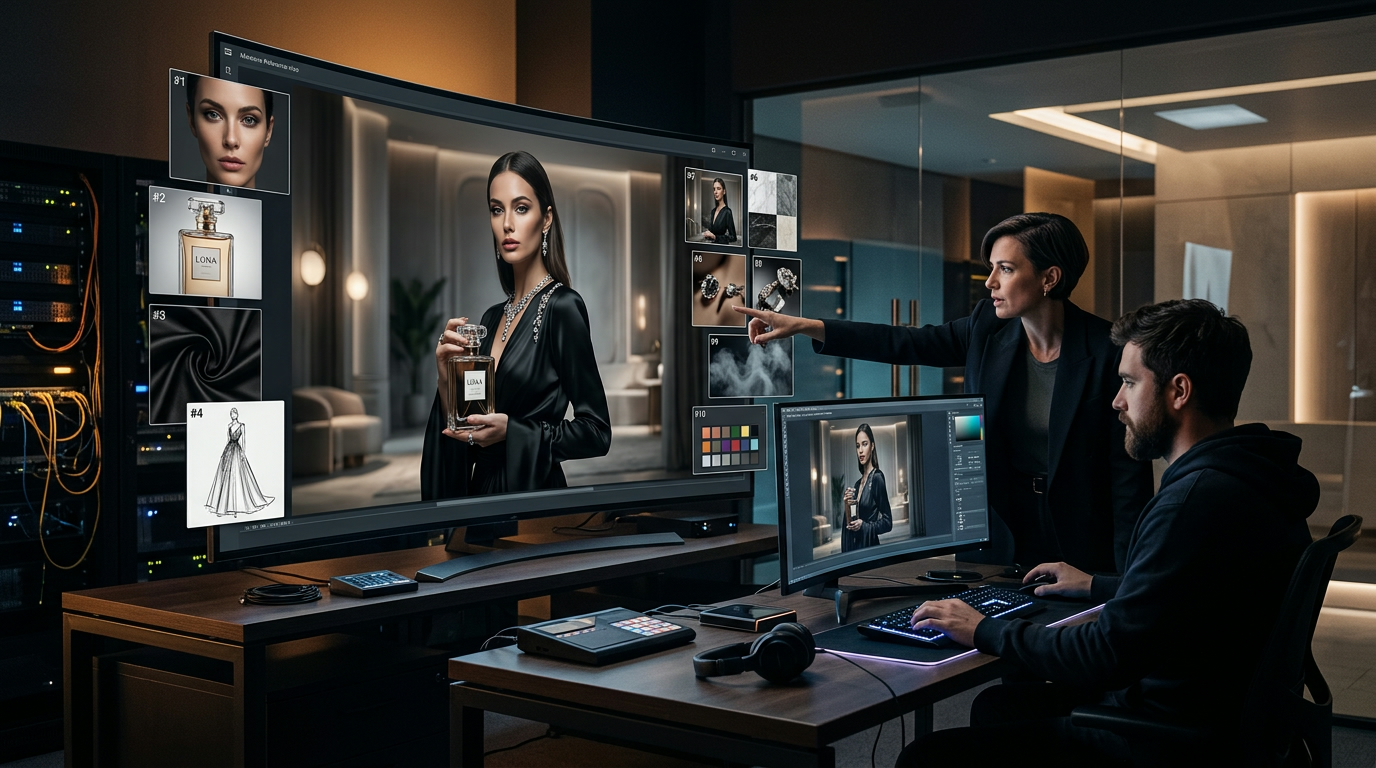
Decision Matrix: Who It’s For (And Who Should Skip)
| Ideal for (Best for) | Skip or wait if |
|---|---|
| DTC cosmetics, fashion, jewelry, and luxury e-commerce brands needing the exact human model, the exact product bottle with legible typography, and precise fabrics without paying $5,000 for physical studio setups. | Casual hobbyist projects that only need generic fantasy art or low-res meme illustrations where brand and character consistency do not matter. |
| Art directors and filmmakers generating anchor keyframes for cinematic video sequences inside DXBuilder's video studio without face-morphing or shape-shifting. | Users who refuse to provide clean reference imagery and insist on relying on pure luck with 3-word generic prompts ("cool cinematic portrait"). |
| Commercial creative agencies requiring complete composition control across 15 aspect ratios (from 1:1, 4:5, and 9:16 vertical to 16:9, 2.39:1, and 21:9 ultra-wide). | Operators attempting to run 80GB model weights locally on overheating laptop GPUs with 8GB VRAM that take 15 minutes per generation. |
Technical Anatomy: Why Midjourney v7 Fails at Multi-Reference Conditioning (And How Nano Banana 2.1 Fixed It)
Until recently, professional art directors faced a glaring limitation in generative image workflows. If you instructed Midjourney v7 or FLUX.1 Pro to combine a person reference (via --cref) with a style reference (via --sref), the results were acceptable. But the moment you added a third requirement — such as the exact geometry of a luxury perfume bottle, an intricate houndstooth coat fabric, and a specific studio lighting setup — the latent space collapsed.
This failure mode is known in diffusion engineering as Latent Tensor Contamination. Conventional models project all reference embeddings into a single cross-attention bottleneck. The outcome was disastrous: the actor's skin inherited the glossy specular texture of the perfume glass, coat buttons morphed into product logos, and shadows disconnected from physics.
Nano Banana 2.1's Breakthrough: 10 Decoupled Semantic Slots
The Nano Banana 2.1 engine (live inside DXBuilder's image studio) eliminates this bottleneck via Decoupled Cross-Attention across 10 Structured Semantic Slots. Each uploaded image is bound to an isolated tensor layer:
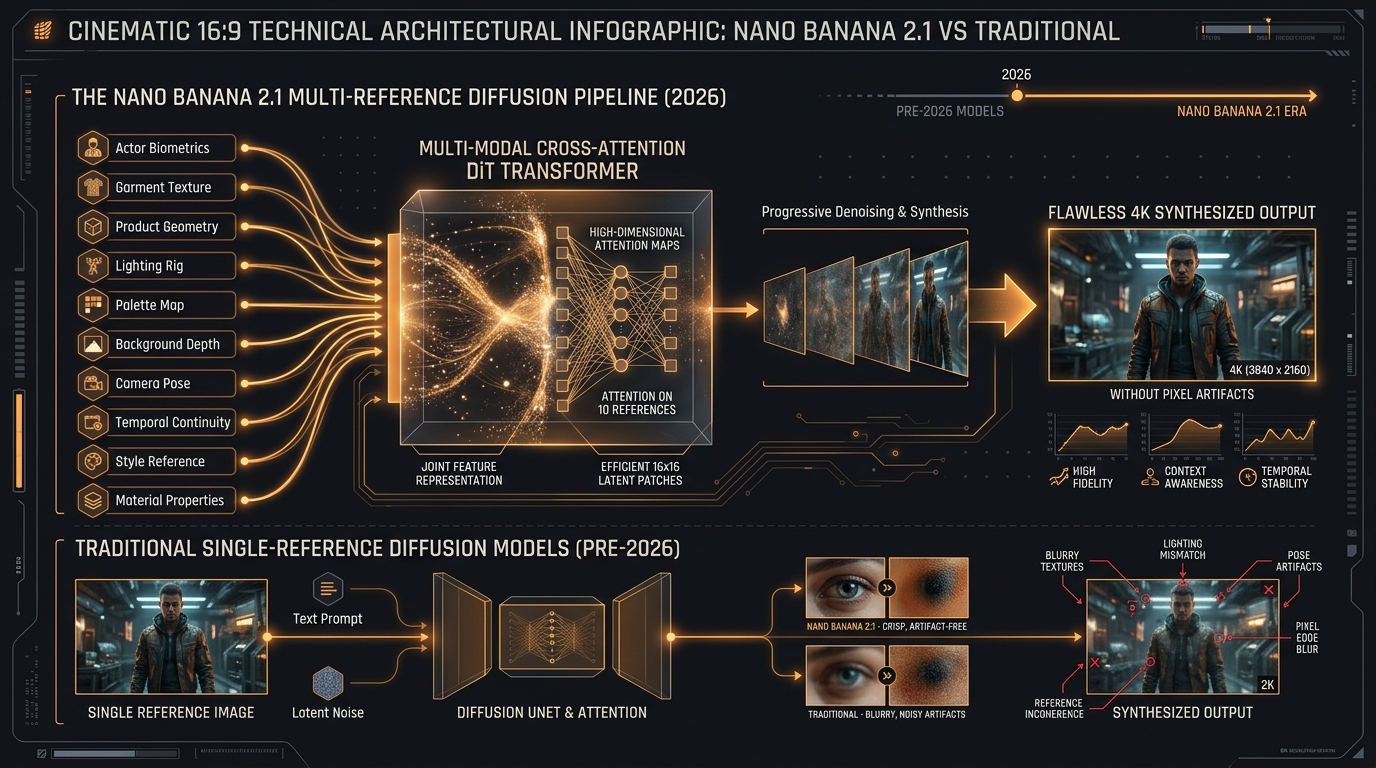
Technical Benchmarks: Leading Image Generation Engines (October 2026)
Direct empirical head-to-head metrics recorded across commercial productions inside DXBuilder:
| Engine / Model | Simultaneous References | Max Prompt Characters | Native Resolution | Aspect Ratios | Typography Fidelity |
|---|---|---|---|---|---|
| Nano Banana 2.1 (DXBuilder) | Up to 10 Simultaneous | 20,000 characters | 4K Native (3840x2160) | 15 Ratios | 9.9 / 10 (Flawless) |
| Midjourney v7 | 2 (1 cref + 1 sref) | ~1,200 characters | 2K Upscaled | 6 Ratios | 8.2 / 10 (Frequent spelling errors) |
| FLUX.1 Pro (Black Forest) | 1 Guide Image | ~2,500 characters | 2K (2048x2048) | 8 Ratios | 9.1 / 10 (Very Good) |
| GPT-Image-2 (Hedra) | 1 Guide Image | ~4,000 characters | 1K (1024x1024) | 3 Ratios | 9.0 / 10 (Good) |
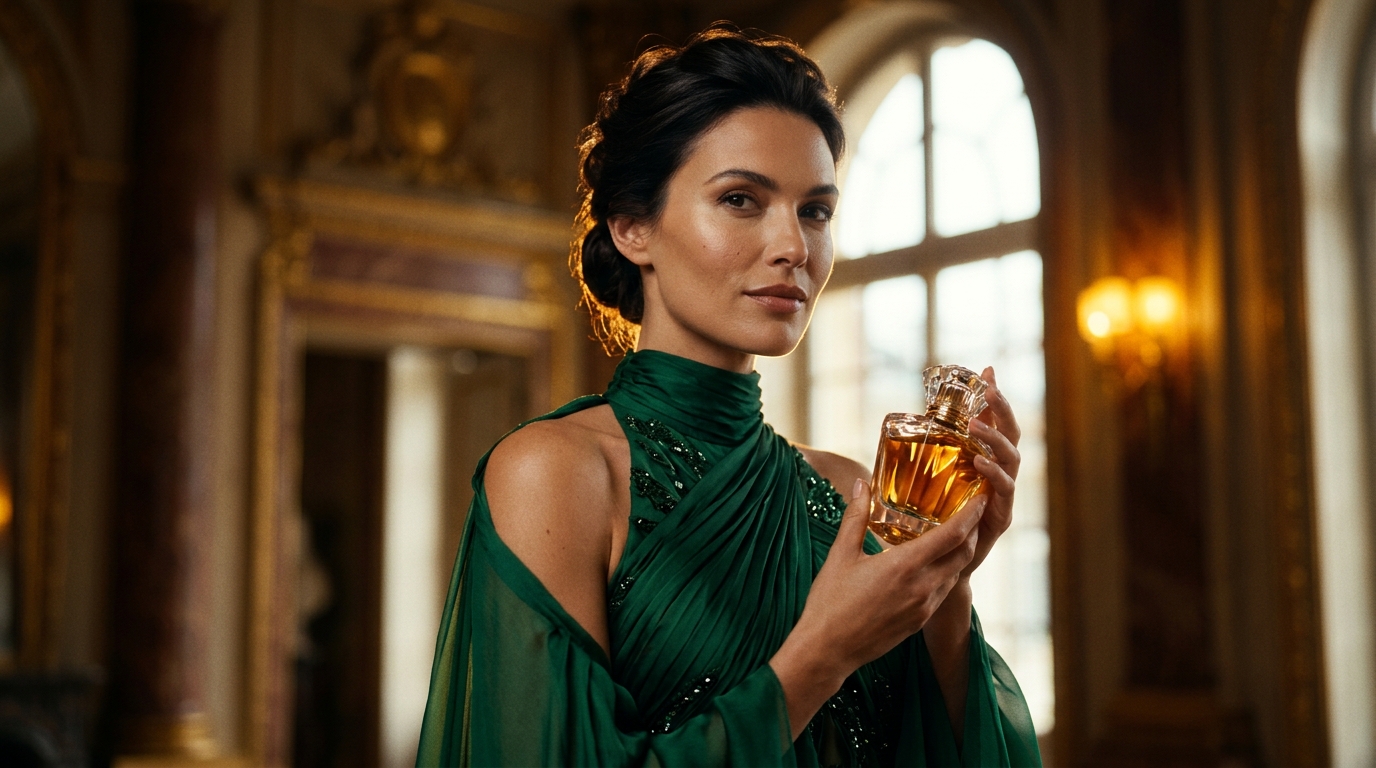
The 3-Stage Production Workflow to Master Nano Banana 2.1
To extract broadcast-grade commercial imagery inside DXBuilder without burning credits or wasting hours in trials, follow this standardized 3-stage studio pipeline:
Stage 1: Reference Curation and Slot Assignment
Do not upload 10 random noisy photos. Curate crisp, cleanly lit assets:
- For Humans: 1 front close-up portrait and 1 three-quarter view under neutral lighting. You can build recurring actor sheets on the Characters (@Hero) page.
- For Products: 1 isolated product packshot on white/transparent background to anchor bottle geometry and packaging typography.
- For Lighting and Mood: 1 lighting reference image establishing key and rim light color temperature (e.g., warm amber #FF9B3E against dark charcoal shadows).
Stage 2: Layered Technical Prompting (Utilizing 20k Characters)
With a 20,000-character context ceiling, replace brief phrases like "pretty woman holding perfume" with multi-layered architectural directives:
- Optics & Framing: Specify focal length (e.g., 85mm anamorphic prime), eye-level framing, and f/1.4 aperture depth of field.
- Material Physics: Optical index of refraction for glass, metallic brush finish for gold caps, and micro-condensation droplets on surfaces.
- Color Grading: Deep charcoal shadows (#131318) balanced with warm amber edge highlights (#FF9B3E) and soft diffused key lights.
Stage 3: 4K Native Diffusion & Video Bridge Export
Select 4K resolution and the ideal ratio (16:9 for widescreen hero banners, 9:16 for TikTok/Reels, or 4:5 for Instagram feeds). The engine synthesizes the image in seconds on high-density cloud accelerators. You can download the pristine still for print/digital ads or push it directly into DXBuilder's 30-second continuous video studio as the anchor keyframe to animate a commercial sequence with synchronized audio.
3 Production Prompt Formulas Ready to Copy
Copy and execute these battle-tested formulas directly in DXBuilder's image studio:
Reference Assets: [Ref 1: Actor Face] + [Ref 2: Fragrance Bottle] + [Ref 3: Amber Lighting Rig]
Prompt: "Ultra-sharp 4K editorial commercial photograph of the model in [Ref 1] holding the luxury fragrance bottle in [Ref 2] in a minimalist high-fashion studio. The lighting follows [Ref 3], featuring a warm amber key light (#FF9B3E) casting soft cinematic shadows across the model's cheekbones. Pristine skin micro-texture, natural pores, no plastic smoothing. The perfume bottle exhibits photorealistic glass refraction, crisp legible embossed lettering, and sharp gold metallic cap reflections. Shot on 85mm anamorphic prime lens, f/1.4, shallow depth of field, 8k resolution, Vogue commercial aesthetic."
Reference Assets: [Ref 1: Actress] + [Ref 2: Couture Dress Silhouette] + [Ref 3: Emerald Silk Texture] + [Ref 4: Architectural Setting]
Prompt: "Full-body commercial fashion lookbook photograph: The female protagonist from [Ref 1] wearing the tailored emerald silk couture gown specified in [Ref 2], with the exact micro-weave texture and fabric sheen shown in [Ref 3]. She stands in the brutalist modern concrete gallery from [Ref 4]. Natural diffused daylight pouring in from floor-to-ceiling architectural windows, balanced with subtle warm rim light on shoulders. Authentic textile folds, flowing drapery, razor-sharp edge definition, 4k native resolution, Hasselblad H6D-100c medium format look."
Reference Assets: [Ref 1: Vehicle Geometry] + [Ref 2: Carbon Texture] + [Ref 3: Wet Track Ground] + [Ref 4: Amber Sunset Sky]
Prompt: "Cinematic 21:9 ultra-widescreen commercial still of the hypercar in [Ref 1] parked dynamically on the rain-soaked asphalt track from [Ref 3]. Bodywork features the precise woven matte carbon-fiber composite texture from [Ref 2]. Golden amber sunset lighting from [Ref 4] bleeding across the horizon, creating glowing reflections on the puddle-strewn ground and sharp specular highlights along the aerodynamic curves. Anamorphic lens flare, volumetric mist, crisp 4K UHD master."
Real Frequently Asked Questions (People Also Ask)
How does Nano Banana 2.1 handle 10 references without bleeding features across objects? ▼
The breakthrough lies in Decoupled Cross-Attention. Unlike legacy systems that compress all input imagery into one unified latent representation, Nano Banana 2.1 assigns dedicated attention masks for face geometry, product morphology, color palettes, and textile weaves. Each tensor is calculated independently and only consolidated during final pixel denoising.
What is the difference between Nano Banana 2.1's native 4K and a traditional AI upscaler? ▼
Traditional upscalers take an existing 1024x1024 output and attempt to hallucinate extra pixels, which often leads to plastic-like skin smoothing and blurred typography. In Nano Banana 2.1 inside DXBuilder, the image is synthesized natively from step zero at 3840x2160, producing authentic skin pores, sharp optical highlights, and perfectly crisp lettering.
Can I use Nano Banana 2.1 images directly inside DXBuilder's 30-second video studio? ▼
Yes — and this is the recommended commercial workflow. Generating an unbroken 30-second video without character or product morphing in Seedance 2.5 or Kling 4.0 requires a pristine master still as a starting anchor. The video engine locks onto the 4K still as absolute geometric ground truth, dedicating all compute to physical motion.
Do I need a high-end local GPU to generate these 4K multi-reference images? ▼
No. All Nano Banana 2.1 diffusion compute runs on DXBuilder's enterprise cloud accelerator clusters. You can direct and export 4K imagery from any laptop, tablet, or phone directly in your browser without hardware strain or hefty electricity bills.
Launch Your Production in DXBuilder's Image Studio Today
Upload up to 10 reference images, leverage 20,000-character prompts, and render commercial-grade 4K visuals with zero post-production friction.
Filipe Heitor
Founder & AI ArchitectProduct engineer, filmmaker, and founder of DXBuilder. Specialist in multi-reference diffusion pipelines, continuous 30-second video conditioning, and scalable generative cinematography for commercial production.