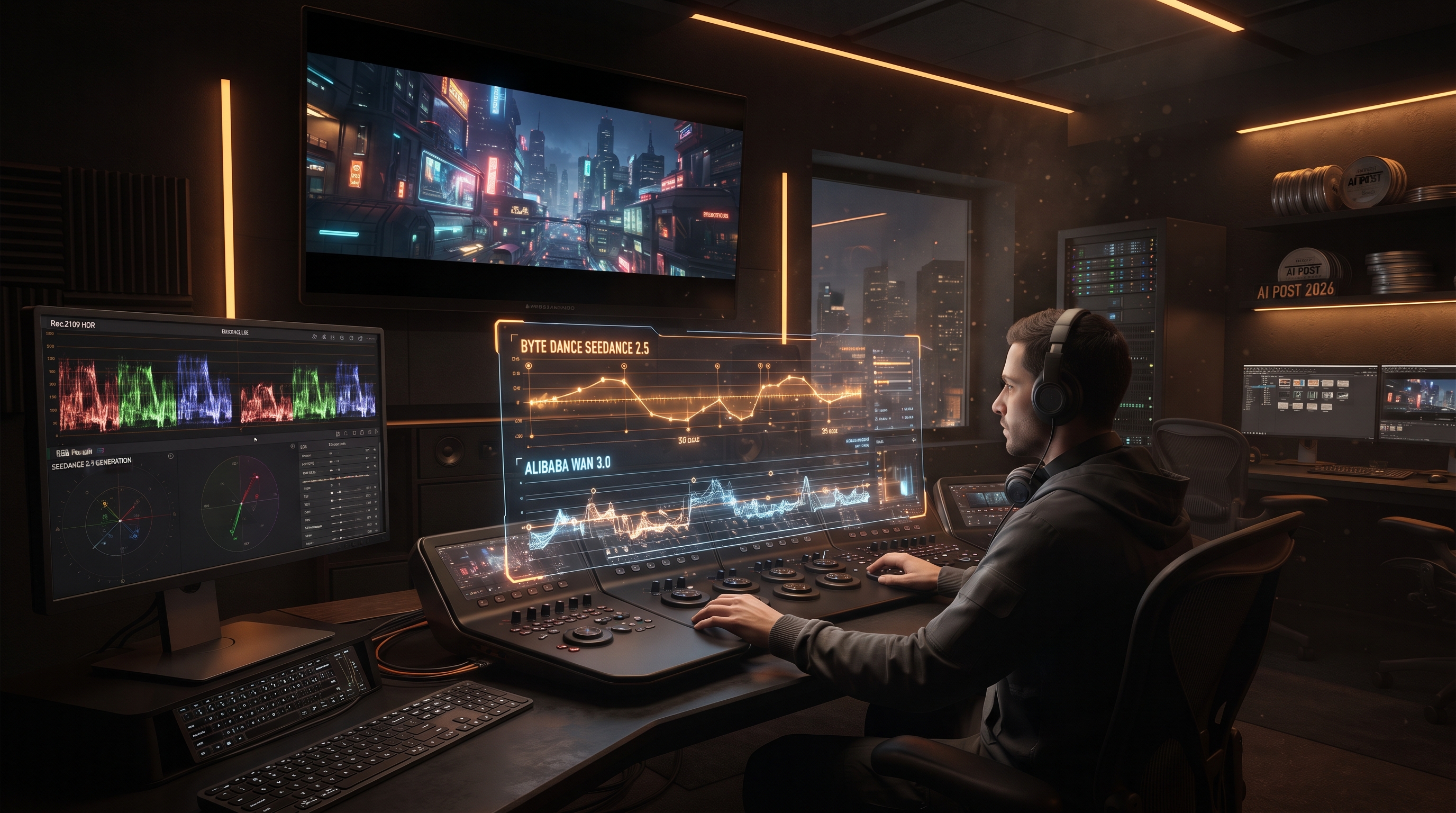
The scheduled final shutdown of the OpenAI Sora API on September 24, 2026, marks the official conclusion of the "4-second fragmented clip" demo era and inaugurates industrial-grade generative filmmaking. Production teams worldwide have decisively migrated to continuous diffusion engines featuring single-pass 30-second native generation, massive multimodal reference capacity of up to 50 assets (ByteDance Seedance 2.5), and mathematically provable physical stability via DiT 2.0 (Alibaba Wan 3.0). Studios and commercial agencies migrating away from OpenAI's legacy infrastructure are experiencing up to a 75% reduction in compute cost per rendered minute alongside deterministic camera and identity control.
Technical Definition: 30-Second Native AI Video Engines
A 30-second native AI video engine is an advanced multimodal diffusion transformer architecture (exemplified by ByteDance Seedance 2.5 and Alibaba Wan 3.0) that generates up to 900 uninterrupted frames at 30fps within a single latent interpolation trajectory, eradicating temporal flicker, character morphing, and manual multi-clip stitching through 3D causal VAEs and unified spatio-temporal self-attention.
1. The Anatomy of OpenAI Sora's Sunset: Why Pure Text-to-Video Failed Commercial Cinema
When OpenAI previewed Sora in early 2024, the prospect of synthesizing hyper-realistic cinematic sequences from natural language prompts captivated the tech industry. However, following the closure of its consumer web applications earlier this year and the confirmed final shutdown of its enterprise API on September 24, 2026, Hollywood studios and performance advertising agencies reached a definitive consensus: unanchored text-to-video cannot satisfy commercial production pipelines.
Commercial filmmakers encountered three fatal bottlenecks within Sora's first-generation architecture:
- Identity Drift and Hallucinated Details: Relying exclusively on text strings to preserve actors' facial geometry, costume stitching, and physical props caused noticeable drift across subsequent shots, requiring hundreds of discarded seeds.
- Prohibitive Inference Overhead: The extreme computational cost of running diffusion without causal temporal compression made enterprise volume scaling economically unsustainable for daily commercial deliverables.
- Temporal Fragmentation (4 to 10s Limits): Crafting meaningful story beats forced video editors into laborious stitching workflows in NLE suites, introducing lighting mismatches and erratic motion jumps.
OpenAI's strategic decision to sunset the Sora API and refocus research capital into interactive world-action agents (such as GPT-6 Astra) left a clear vacuum, swiftly captured by next-generation temporal diffusion foundations.
2. ByteDance Seedance 2.5: The 50-Asset Multimodal Powerhouse and 30-Second Single Pass
Officially launched in late July 2026 and rapidly adopted throughout August and September, ByteDance's Seedance 2.5 has rewritten the rulebook of AI filmmaking. While its predecessor Seedance 2.0 achieved industry fame for native phoneme lip-sync and audio synchronization, version 2.5 delivers the benchmark professionals demanded: 30 seconds of seamless, uninterrupted video in a single inference pass.
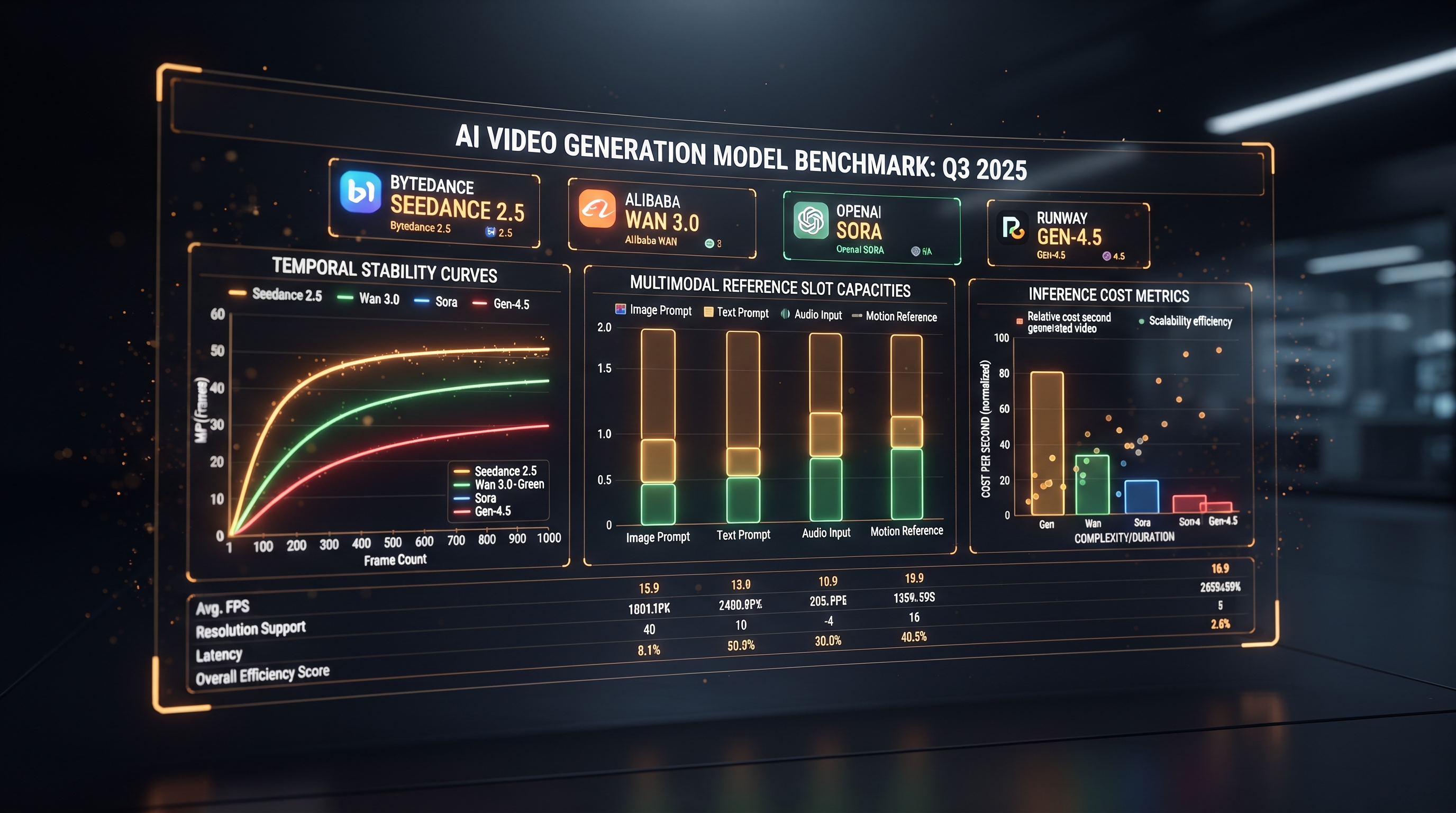
Its primary engineering triumph is multimodal reference conditioning. Seedance 2.5 allows creators to inject up to 50 distinct reference assets into a single generation job:
30 Image References
Turnaround sheets for @Hero characters, background set lighting maps, product CAD renders, and costume swatches.
10 Video Reference Clips
Camera dolly paths, physical choreographies, dynamic fluid simulations, and visual rhythm guides.
10 Synchronized Audio Tracks
Spoken dialogue stems for zero-latency lip-sync, musical timing beats, and spatial foley cues.
Crucially, the new Timestamp-Level Regional Steering capability lets directors insert keyframed instructions: changing camera focal length from 24mm to 85mm precisely at second 00:18.50 without breaking temporal physics or causing background warping.
3. Alibaba Wan 3.0: Diffusion Transformer Supremacy and Document-Guided Storytelling
Unveiled by Alibaba's generative media division in August 2026, Wan 3.0 stands as the analytical counterweight to Seedance. Engineered on a Diffusion Transformer (DiT 2.0) framework with a custom causal 3D VAE, Wan 3.0 completely eliminates surface flickering on reflective metals, transparent glass, and intricate textile weaves.
Its standout innovation is direct conditioning on structured documents and web assets. Producers can upload a screenplay formatted in Fountain or Final Draft, and Wan 3.0 parses scene lighting, camera movement, and character blocking without drifting off-script throughout the 30-second duration.
4. The Post-Sora Migration Matrix: Comparing the Top 2026 AI Video Engines
For enterprise pipelines seeking to migrate before the September 24 shutdown, here is an objective technical breakdown across the leading five production engines:
| Engine / Model | Max Duration (Single Pass) | Multimodal Reference Slots | Native Audio & Foley | Temporal Stability Score | Relative Cost / Min | Production Status |
|---|---|---|---|---|---|---|
| OpenAI Sora (Legacy) | 4 to 10s | Text-Only / 1 Image | No (Silent) | 68.4% (Motion warping) | Extremely High | API Sunsets Sept 24, 2026 |
| ByteDance Seedance 2.5 | 30s Native | 50 (30 img + 10 vid + 10 audio) | Yes (Phoneme Lip-sync + Foley) | 96.8% | Economical / Optimized | Active Enterprise Standard |
| Alibaba Wan 3.0 | 30s Native | Multimodal + Docs/Scripts | Partial / Music Stems | 95.4% | Highly Affordable | Open Cloud Availability |
| Runway Gen-4.5 | 15s | Camera Trajectories & Motion Brush | Synthetic Stems | 91.2% | Mid-to-High | Active in Studio Pipelines |
| MiniMax H3 Max | 12 to 20s | Actor Performance & Musical Vocals | Outstanding Vocal Engine | 89.6% | Low Cost | Active (Launched Sept 2026) |
5. The Prompt Translation Blueprint: Modernizing Legacy Prompts for 30-Second Diffusion
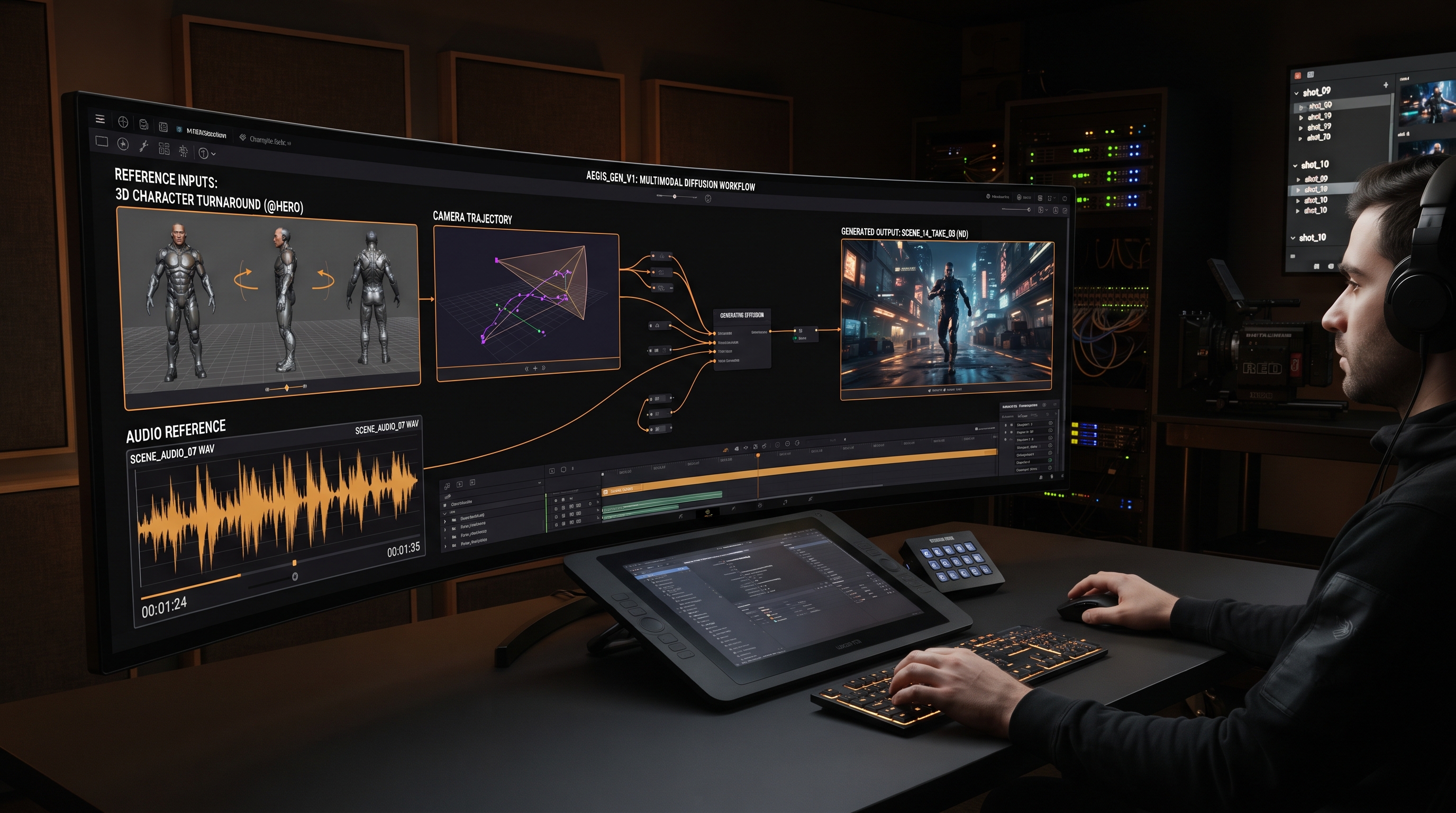
Migrating from OpenAI's unstructured text prompts to modern 30-second conditioning requires adhering to the Tri-Axial Directing Formula: Anchor Asset + Kinematic Trajectory + Native Acoustic Directive.
[CAMERA & TIMELINE]: Smooth cinematic slow-motion orbit around the luxury chronograph watch resting on wet dark slate stone. 00:00-00:10: Extreme macro lens on ticking mechanical escapement. 00:10-00:20: Seamless pull-back into a rotating 360-degree turntable shot with shallow depth of field. 00:20-00:30: Dramatic amber studio rim-light sweep (#FF9B3E) revealing brushed titanium bezel.
[PHYSICS & SURFACE]: Micro water droplets condensing on sapphire glass, perfect optical refraction, zero metallic surface flicker.
[NATIVE AUDIO]: [AUDIO: crisp mechanical watch tick, heavy sub-bass atmospheric drone, soft studio reverb echo — NO spoken dialogue]
[SCENIC ACTION]: Continuous tracking shot walking alongside Elena inside a rain-drenched neon alleyway. 00:00-00:15: Medium tracking shot keeping pace with her footsteps, heavy rain ripples in puddles. 00:15-00:30: Elena turns towards camera, pulls trench coat collar tight, delivers dialogue with exact phoneme-accurate lip-synchronization.
[LIGHTING]: Anamorphic lens flare from distant sodium streetlights, volumetric steam rising from asphalt, photorealistic skin pores and wet hair strands.
[AUDIO & FOLEY]: [AUDIO: synchronized footsteps splashing in water, distant thunderstorm rumble, clear English female dialogue with natural acoustic proximity]
6. How Modern Studios Execute the Post-Sora Stack on DXBuilder
For enterprise media teams and independent creators seeking to maintain production momentum without spinning up GPU clusters across distributed cloud providers, DXBuilder offers the ultimate turnkey solution.
The platform seamlessly unifies ByteDance Seedance 2.5 and Alibaba Wan 3.0 within an editorial-first suite designed for commercial output:
- Consistent Cast in Character Studio: Lock recurring character likenesses with the @Hero Identity Engine, preventing facial warping across scenes.
- Intelligent Multi-Scene Directing in Story Lab: Structure multi-scene arcs inside Story Lab, where a dedicated Gemini 3.8 Flash model inspects closing frames to ensure seamless continuity in the next scene's opening lighting.
- Production-Grade Presets: Access dozens of pre-configured vertical and widescreen video presets calibrated for viral social campaigns and luxury brand commercials.
New creators can test their Sora migration directly in the DXBuilder Video Studio with 15 complimentary credits upon signup. For high-volume enterprise pipelines, transparent credit tiers in Plans & Pricing deliver rendering costs up to 60% lower than legacy closed-model subscriptions.
7. Frequently Asked Questions Regarding the OpenAI Sora Shutdown & 30-Second AI Video
When does the OpenAI Sora API permanently shut down?
OpenAI permanently sunsets the Sora enterprise API on September 24, 2026. Following this deadline, all API endpoints will reject incoming requests.
What is the best enterprise alternative to OpenAI Sora?
ByteDance Seedance 2.5 is the primary enterprise successor, delivering 30-second native single-pass generation, 50 multimodal conditioning slots, and built-in acoustic lip-sync. For text-heavy, script-aligned generation, Alibaba Wan 3.0 is the preferred diffusion transformer engine.
Do 30-second native AI clips experience visual degradation over time?
No. Unlike 2024-era video generators that relied on concatenated autoregressive frame projection, 2026 engines employ 3D Causal Latent Diffusion Transformers. Geometric accuracy, illumination balance, and character traits remain mathematically anchored throughout the entire 30-second window.
Are videos generated with Seedance 2.5 and Wan 3.0 cleared for commercial advertising?
Yes. Commercial rights are fully retained by the creator on licensed platforms such as DXBuilder, adhering to C2PA metadata provenance standards and the EU AI Act Article 50 guidelines.
How can studios test the migration without complex local setup?
Simply visit dxbuilder.io/video, where both engines are fully integrated in the cloud and ready to run with instant complimentary credits.